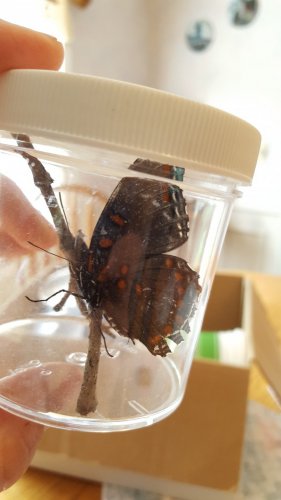
It's got a hint of red on the upper-outter wings if you examine it closely. It's actually called a
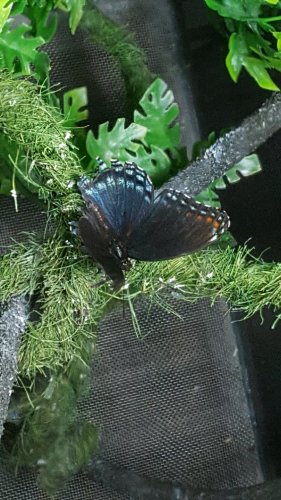
Limenitis arthemis astyanax, or, commonly called the Red-Spotted Purple Butterfly.
Picture from Wiki:
https://en.wikipedia.org/wiki/Limenitis_arthemis#/media/File:Red_Spotted_Purple.JPG
Wikipedia:
https://en.wikipedia.org/wiki/Limenitis_arthemis
"the red-spotted purple is a mimic of the poisonous Pipevine Swallowtail (
Battus philenor) and is typically found in open woodlands and along forest edges."
The Red-Spotted Purple uses
Batesian mimicry to LOOK poisonous like the Pipevine Swallowtail, however, it is completely non poisonous.
If you go to this link and scroll about halfway down, you can read a tad about the Red-Spotted Purple and see both the top and the bottom of the wings. The bottom of the wings display a row of red spots.
http://trekohio.com/2012/09/27/male...tterflies-and-black-butterflies-of-all-sorts/
-----------------------------
I actually found one a couple weeks ago while bug hunting at my mom's house out in the country and fed it to my panther chameleon....
View attachment 163890
Here is a pic of it in hanging out in an old cage I have before I fed it off to my chameleon:
View attachment 163888
My cham loved it actually. Went for it right away. There were no ill effects either. I always do research on every single insect I catch to verify if it is toxic or not. If there is any doubt at all, I release it. In this case, the Red-Spotted Purple Butterfly is completely safe. There may not be much meat on it, as there isn't on most butterflies.... but hey, variety is always great and your cham won't complain. The different colors are good visual stimulation, and a different taste in their mouth every once in a while is always a plus as well.

I found quite a few different butterflies that weekend.....
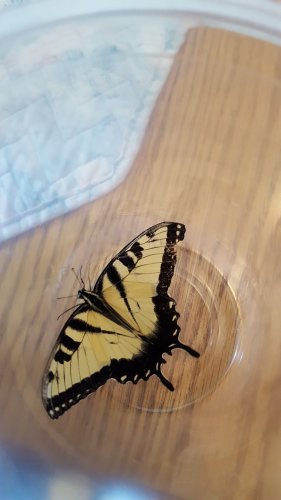
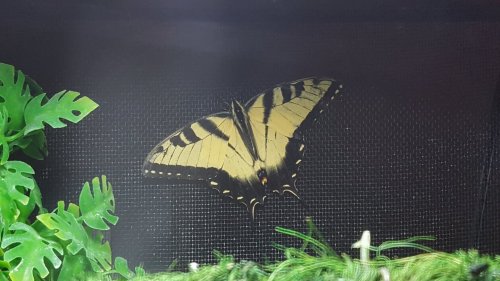
Here is a
Papilio glaucus, commonly known as the Eastern Tiger Swallowtail.
View attachment 163893 View attachment 163894
This butterfly too, is completely harmless. Since the adults of this species are palatable, or pleasant to taste, some of the females have dark morphs which use Batesian mimicry just like the Red-Spotted Purple to look like the same poisonous Pipevine Swallowtail.
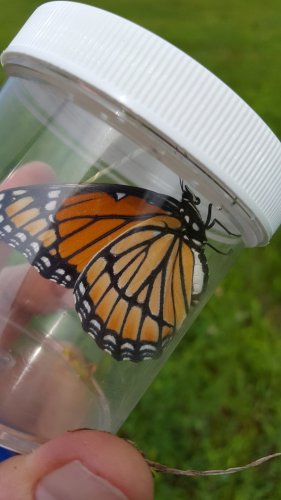
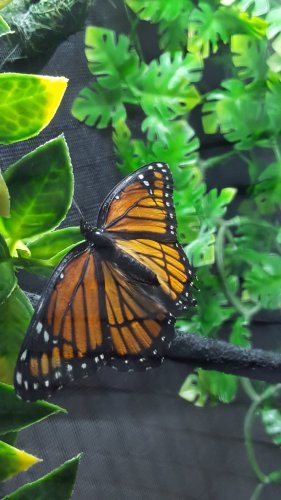
Here is another butterfly I caught, the
Limenitis archippus, also known as a Viceroy Butterfly.
View attachment 163895 View attachment 163896
Like the other two butterflies discussed here, this species ALSO mimics another butterfly, the
Danaus plexippus, widely-known as the the Monarch Butterfly. The Viceroy uses
Müllerian mimicry in this case, in which two different, very distasteful species mimic each other's warning signs. Although the Viceroy Butterfly tastes absolutely terrible, it is completely non-toxic. That same cannot be said about the Monarch Butterfly though, as the caterpillars feed on the Milkweed plant which contains a poisonous toxin, called "cardenolide aglycones", that is stored in their bodies, making them toxic and taste awful.
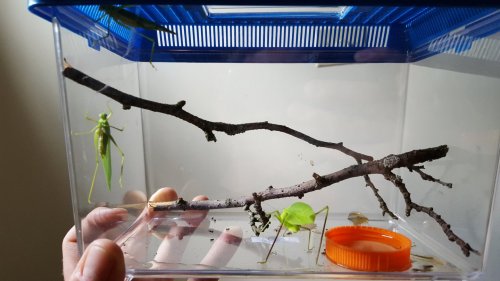
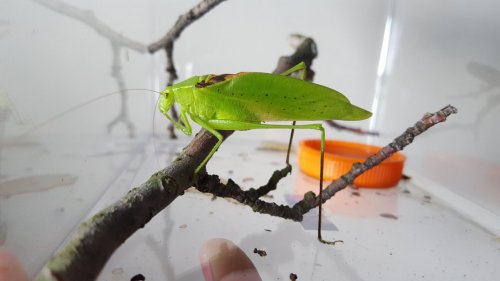
Yep.... that was a good weekend for butterflies. I also caught some Katydids that same weekend.....
View attachment 163898 View attachment 163897
Needless to say, my chameleon ate good.




 But hey.... I like treating my cham and making sure he has a huge variety of feeders when I can. He eats better than I do!